Program
Terrain Park & Freestyle Coaching for Riders Ready to Progress
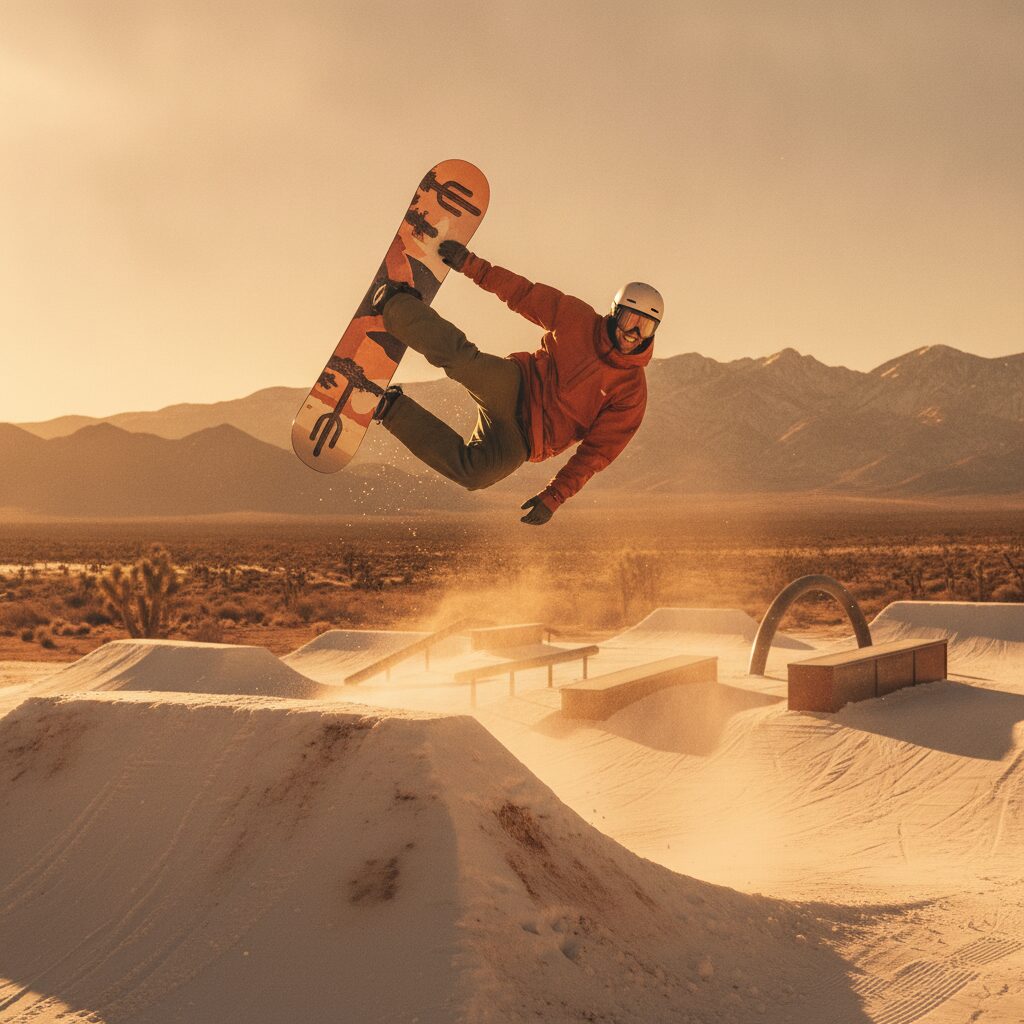
Once you can link turns and control your speed on open terrain, the terrain park is where a lot of riders actually want to spend their time — but jumping in without a real progression is how beginners get hurt or get stuck avoiding the park altogether. Snowboard Phoenix's freestyle coaching is built for riders who already have the fundamentals down and want a deliberate, controlled path into boxes, rails, and jumps.
Who This Coaching Is For
This isn't a beginner track — it's for riders who can already link turns, control speed on green and blue terrain, and stop reliably on command. If that describes you but the park still feels intimidating or off-limits, that's exactly the gap we work on. A lot of capable all-mountain riders never set foot in the park because nobody ever walked them through it in a structured way, and freestyle riding genuinely does reward a progression instead of trial and error on features that don't forgive mistakes.
Building Real Park Fundamentals First
Before any feature, we work on the skills that actually make park riding safe and controllable: approach speed management, staying centered over the board through changes in terrain, and riding switch (backward) at a basic level, since a lot of park features involve landing or riding away switch whether you planned to or not. We also spend real time on how to read a feature from the top — judging your speed in, understanding takeoff and landing shape, and knowing when a feature isn't right for where you are yet. That judgment is as much a part of freestyle coaching as the physical skills.
We also work on ollies and basic grabs on flat ground before ever taking them into the park, since a rider who can't pop the board on command isn't ready to control a jump's landing yet. Practicing these fundamentals away from the pressure of a real feature — no crowd, no line behind you, no landing zone to worry about — lets a rider build the muscle memory at their own pace, which almost always translates into more confident, more controlled riding once we do move into the park itself.
The Progression: Boxes, Rails, Then Jumps
We start with flat, low boxes — the most forgiving feature in any park, and the right place to build the balance and commitment that carries into everything after it. From there we move to slightly angled boxes and low rails, working on approach line and staying centered through the feature rather than leaning back or bailing early. Jumps come after boxes and rails are solid, starting with small, mellow jumps where the priority is a controlled, balanced landing — not amplitude. We never push a rider to a bigger feature until the smaller version of that feature is genuinely comfortable, not just survivable.
Safety and Etiquette in the Park
A big part of freestyle coaching that doesn't show up in a highlight reel is teaching the unwritten rules that keep a park safe: checking that a feature is clear before you drop in, calling your drop if there's any doubt, never stopping in a landing zone, and matching your feature choice to your actual skill level instead of your ambition for the day. Riders who skip this part of the learning curve are the ones who end up in someone else's way — or in the way of someone landing on top of them. We treat etiquette as a core skill, not an afterthought.
What a Coaching Session Looks Like
Sessions run in the terrain park itself once we've confirmed your fundamentals are solid enough to work there safely. We'll spend time on flat ground and small features working on technique before repeating it on the feature you're actually trying to progress on, with direct feedback after each attempt rather than a lecture up front and silence after. Private coaching is the standard format here, since freestyle progression is highly individual — what one rider needs to fix is rarely what the next rider needs.
Plan for a session to run a few hours, with real rest built in — freestyle riding is physically demanding in a different way than all-mountain riding, and fatigue is one of the biggest hidden risk factors in park injuries. We'd rather end a session early with good technique intact than push through fatigue chasing one more attempt at a bigger feature.
Frequently Asked Questions
Related Programs
Ready to Plan Your First Trip?
Tell us your experience level and which resort you're headed to, and we'll set you up with the right lesson.