Program
Board, Boot & Binding Fitting for Snowboarders
A board that's the wrong length, boots that don't actually fit, or bindings set to the wrong stance angle can quietly ruin an otherwise good day — and most riders never realize gear is the problem, they just assume they're struggling with technique. Snowboard Phoenix offers dedicated gear and stance fitting so you show up to your lesson or trip with a setup that actually works for how you ride, not a generic rental grab.
Why Fit Matters More Than People Expect
A board, boots, and bindings that don't match your size, weight, and stance don't just feel uncomfortable — they actively work against you while you're trying to learn. A board that's too long is harder to turn and control at slow speed, which is exactly the speed a beginner spends most of their time riding at. Boots that are too loose let your foot move inside them, which translates into sloppy, delayed edge control no matter how good your technique is. None of this is obvious from the outside, which is why so many riders blame themselves for struggles that are actually a gear fit problem.
This matters just as much for a rider who already knows how to ride and is renting for a specific trip. Grabbing whatever board happens to be available at a busy rental counter, without checking length, flex, or your natural stance angle, is a common reason an otherwise capable rider has an off day on unfamiliar terrain. A short fitting conversation before you go removes a lot of that uncertainty.
Finding Your Stance: Regular or Goofy
Before board and binding setup means anything, you need to know which way you naturally ride — regular (left foot forward) or goofy (right foot forward). We use a few quick, reliable tests: which foot you instinctively step forward with when pushed off balance from behind, which foot leads when you slide on a smooth floor in socks, and which foot you'd naturally kick a ball with (typically your back foot on a board). Most people have a clear natural answer once we run through it in person, and getting this right before your first day matters — riding your unnatural stance the whole time makes everything harder than it needs to be.
Board Sizing: Length, Width, and Flex
Board length is based mainly on your height and weight, with riding style as a secondary factor — a shorter board is more forgiving and easier to turn for a beginner working on fundamentals, while a longer board offers more stability at speed for a rider who's progressed further. Width matters too, especially for riders with larger feet, since boot overhang past the edges of the board causes unwanted edge contact with the snow. Flex — how stiff or soft the board is — affects how forgiving it feels and how it performs in different terrain, with softer flex generally suiting beginners and freestyle riders and stiffer flex suiting more aggressive all-mountain riding. We walk through all three with you rather than sizing off a generic height chart alone.
Boot Fit: The Part Everyone Gets Wrong
Boot fit is where most riders make the biggest mistake, usually by sizing boots like street shoes and ending up with too much room. A properly fitted snowboard boot should feel snug through the whole foot with your toes just barely touching the end when standing straight, then pulling back slightly off the end once you flex your knees forward into a riding stance. Too loose and your foot slides inside the boot, killing precise edge control; too tight and you'll be dealing with pressure points and cold feet within an hour. We check fit in an actual riding stance, not just standing flat, since that's the position that matters on snow.
Binding Angle and Stance Width
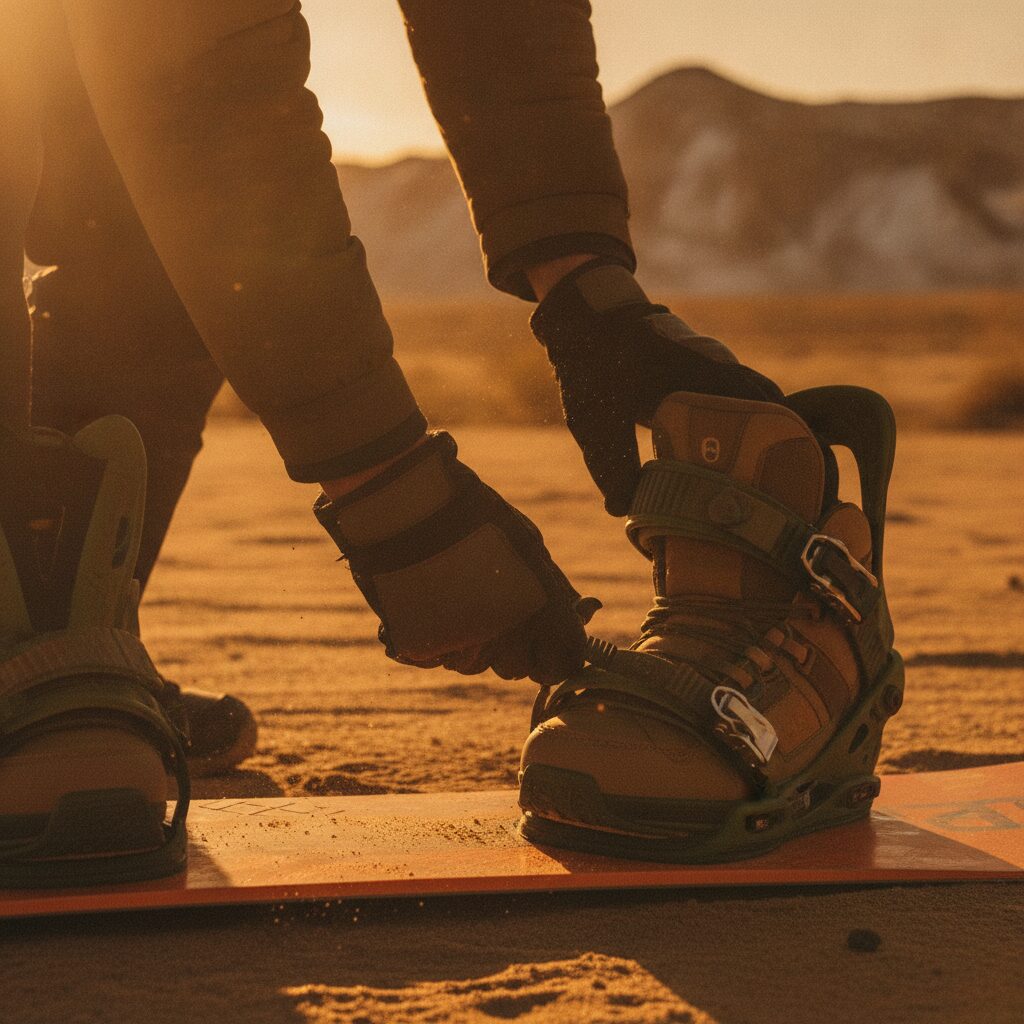
Binding angle is how many degrees your bindings are rotated relative to the board's centerline, and stance width is how far apart your feet sit — both affect balance, comfort, and how naturally you initiate a turn. A common beginner-friendly setup uses a moderate positive angle on the front foot and a slight positive or neutral angle on the back foot, with stance width roughly shoulder-width or a bit wider, though the right numbers vary by height and riding goals. Park-focused riders often run a more centered, symmetrical stance for riding switch easily, while all-mountain riders may prefer more front-foot angle for carving. We'll set yours based on how you actually plan to ride, not a one-size-fits-all default.
Even a few degrees off from a comfortable angle can make balance and turning feel harder than they should, especially in your first few sessions when you're already processing a lot of new sensation at once. It's a small adjustment on paper, but getting it right early removes one more variable while you're still working on the fundamentals, so any struggles you have on snow are actually about technique — not fighting a setup that was never quite right for you.
Frequently Asked Questions
Related Programs
Ready to Plan Your First Trip?
Tell us your experience level and which resort you're headed to, and we'll set you up with the right lesson.