Program
Private & Group Snowboard Lessons for True Beginners
Snowboarding isn't a smaller version of skiing, and it shouldn't be taught like one. Snowboard Phoenix exists for exactly one reason: to teach true beginners how to ride, with instruction built from the ground up around what actually trips up a first-timer on a single board instead of two independent skis. If the honest answer to "have you ridden before" is no, this is where you start.
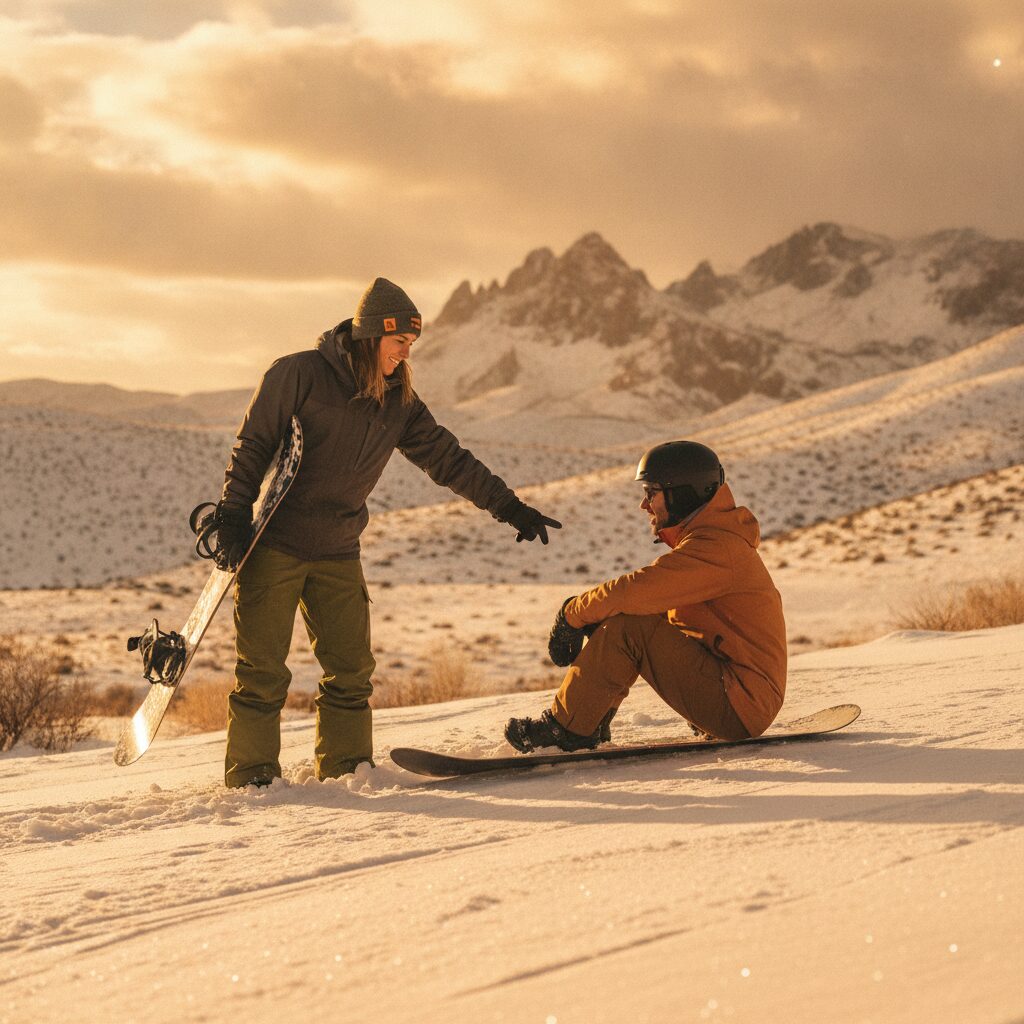
Snowboard-Only, on Purpose
A lot of instruction shops treat snowboarding as an afterthought — a smaller program bolted onto a bigger ski school, taught by whoever happens to also ride. We don't teach skiing at all, which means every hour of every lesson we run is aimed at snowboarding specifically. That focus changes what a first lesson actually looks like: instead of generic "balance on snow" instruction, you get progression built around how a snowboarder actually learns — both feet fixed to one board turned sideways to the fall line, which is a genuinely different skill than anything on two independent skis.
Most of our students are Phoenix and Valley adults who grew up somewhere without snow and never had a real shot at learning, or who tried once on a group trip years ago and never got past the frustrating first hour. Some are booking ahead of a specific resort trip; others just want to get good at something new. Whatever brought you here, if you've never strapped into a board before, you're exactly who this lesson track is for.
What a Beginner Lesson Actually Covers
We start with the fundamentals that make everything after them possible: strapping in and standing on the board, finding your balance with both feet fixed at an angle instead of independent, and — because almost everyone falls a lot in the first hour — how to fall in a way that doesn't hurt your wrists or tailbone. From there we move into the falling leaf, sliding side to side down the fall line on one edge of the board, which is the foundational movement nearly every rider learns before their first real turn. Once that clicks, we work on linking your first turns and controlling speed on your own terms instead of just pointing downhill and hoping.
We also cover the practical mechanics nobody thinks to explain in advance: getting on and off a chairlift with one foot unstrapped, walking or skating across flat ground without both feet locked in, and reading a trail map so you know what green, blue, and black terrain actually means once you're on a real mountain.
Private vs. Group Lessons
Private lessons put the full lesson on your specific sticking points and your pace — a strong option if you're nervous, want to move through the frustrating early falls as fast as possible, or are booking for just yourself or one other rider. Group lessons put you with other beginners working through the same falling-leaf stage at the same time, which a lot of people find genuinely reassuring — everyone around you is falling too, and that takes some of the self-consciousness out of learning. Group format also tends to cost less per person. Tell us your group size and preference when you book and we'll set up the right format.
The First-Hour Learning Curve, Honestly
Most first-time riders spend more time on the ground in their first hour than they expected going in, and that's normal — it's how the sport works, not a sign you're bad at it. Skiing lets you make small, controlled progress from the very first minute; snowboarding tends to involve a slower, more frustrating start followed by a faster breakthrough once the falling-leaf and basic-turn movements set in. Knowing that going in matters, because a lot of first-timers give up in the first hour thinking it's a preview of the whole day, when it's actually the hardest part of the entire learning curve.
What to Expect on Lesson Day
Plan for a lesson to run a few hours depending on the format and how you're progressing. We start on the flattest, most forgiving terrain available and only move to anything with real slope once the fundamentals hold up — rushing a beginner onto steeper terrain before they can control speed is one of the most common reasons a first day goes badly, and we deliberately don't do that. By the end of a solid first lesson, most riders can link basic turns, control their speed, and stop on purpose on gentle beginner terrain, which is exactly the foundation the rest of your riding builds on.
Frequently Asked Questions
Related Programs
Ready to Plan Your First Trip?
Tell us your experience level and which resort you're headed to, and we'll set you up with the right lesson.